Buying a new boiler is often something homeowners start thinking about after the old one becomes unreliable. It may have developed repeated faults, stopped providing enough hot water or simply reached a point where another repair no longer feels worthwhile.
At that stage, the biggest mistake is to focus only on the boiler model.
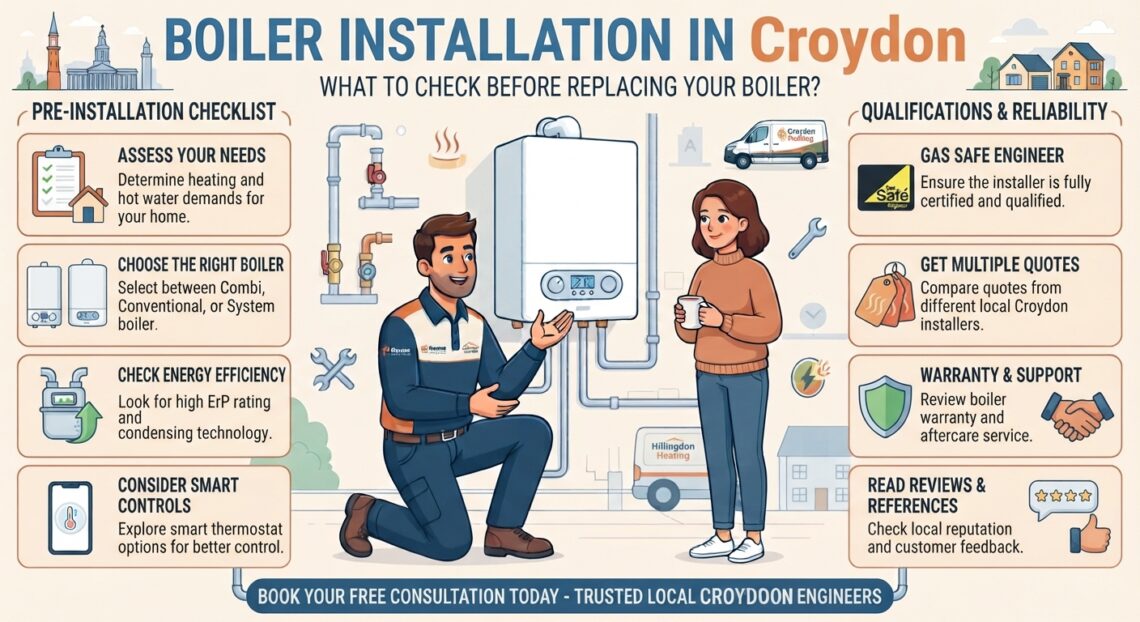
For a homeowner planning Boiler Installation in Croydon, the property itself, existing heating setup, available space and daily routine all need to be considered. The right installation is not necessarily the most expensive one. It is the one that makes sense for the home and solves the problems that led to the replacement.
What Made You Decide to Replace It?
Before looking at new boilers, identify the reason the existing one is being replaced.
Was it breaking down regularly? Has the heating become unreliable? Are repair costs becoming difficult to justify? Has the household changed since the current boiler was installed?
This matters because a replacement should address the weaknesses of the old setup.
For example, a homeowner who has always struggled with hot-water availability may need to think differently about the replacement than someone whose only issue has been an ageing boiler with repeated mechanical faults.
Take a Fresh Look at the Boiler Location
Many homeowners automatically assume the new boiler should go exactly where the old one was.
That can be practical, but it should not be assumed without an assessment.
Look at how accessible the current location is. Is the appliance difficult to reach for maintenance? Does the surrounding cupboard make access awkward? Is the boiler positioned somewhere where operating noise is noticeable?
During Boiler Installation in Croydon, the installer can assess whether the current position remains sensible or whether another location would work better.
The best position is not simply where the old boiler happened to be.
Consider the Way Your Home Uses Hot Water
A boiler replacement should reflect the people living in the property.
Think about your busiest time of day.
Do several people shower before work or school? Is hot water needed from more than one outlet? Does the household regularly use the heating and hot water at the same time?
These everyday habits can be more useful than simply choosing a boiler based on a specification.
A system that matches the actual household routine is more likely to meet expectations after installation.
Do Not Assume Every Existing Component Needs Replacing
A new boiler does not automatically mean replacing the whole heating system.
Your existing radiators, controls and other components may still be suitable, depending on their condition and compatibility.
This is worth discussing before work starts.
If the property has one radiator that has always struggled to heat, for example, replacing the boiler may not solve that separate issue. Being clear about which problems belong to the old boiler and which belong to the wider system helps avoid unrealistic expectations.
Ask What the Installation Actually Includes
Two boiler installation quotes can look very different once the details are examined.
Before approving the work, ask what is included in the price.
Does it cover removal of the old appliance? Are changes to existing pipework included? What about controls and other associated installation work?
A clear quotation makes it easier to compare providers based on the complete job rather than the boiler’s advertised price alone.
Existing Pipework Should Be Assessed
The condition of the current pipework can affect a replacement installation.
The new boiler needs to work correctly with the existing heating arrangement, and some installations may require alterations or upgrades to sections of pipework.
Homeowners do not need to work out what needs changing themselves.
The useful question is simply whether the existing setup is suitable for the proposed boiler and whether any modifications are expected.
Knowing this before installation day avoids surprises when the work has already started.
Think About Controls From the Beginning
The boiler may be new, but the way you control your heating still matters.
If the current thermostat or programmer is difficult to use, replacing the boiler without reviewing the controls may leave the homeowner with part of the old frustration.
On the other hand, there is no reason to replace controls that already work well simply because a new boiler is being installed.
The right approach is to assess how the household uses the heating and whether the current control arrangement still makes sense.
Installation Day Should Not Be a Mystery
Homeowners usually want a straightforward answer about what will happen on the day.
Will access be needed to other parts of the property? How much of the old system will be removed? Will the heating and hot water be unavailable while the work is taking place?
These are simple questions, but getting clear answers beforehand makes the day much easier to manage.
This is particularly important when the household has work, school or other commitments that depend on having the property available.
A Neat Installation Is About More Than Appearance
Once the new boiler is fitted, most homeowners naturally look at whether it looks tidy.
That matters, but there is more to a good installation than neat pipework.
The appliance should remain accessible for future maintenance, relevant connections should be appropriately arranged and the surrounding installation should make practical sense.
The finished setup should work well not only today but also when the boiler needs its next service or repair.
Do Not Forget the Flue and Condensate Route
These parts are easy to overlook because they are not something homeowners interact with every day.
The flue and condensate arrangements form part of the boiler installation and need to suit the appliance and the property’s layout.
Where a boiler is moved or replaced with a different arrangement, these details may need fresh consideration.
They should be part of the installation plan rather than treated as an afterthought.
What Should Happen Before You Pay the Final Balance?
Before the installation is considered complete, make sure the new system is operating correctly.
The homeowner should understand the basic controls and how to adjust the heating and hot-water settings.
It is also worth checking that the installer has explained anything that is different from the previous boiler.
A few minutes of proper handover can make the difference between confidently using the new system and spending the first few weeks trying to work out the controls.
Keep the Installation Information
Do not throw away the paperwork once the boiler is working.
Keep records of the installation and any information supplied about the appliance.
This creates a useful history for future servicing and repairs.
It also means that if you later need to discuss the boiler with an engineer, you have accurate information about what was installed rather than relying on memory.
Think About the Next Five Years, Not Just Installation Day
A new boiler is a long-term household purchase.
When choosing the installation, think beyond the immediate improvement.
Will the boiler remain accessible? Are the controls convenient? Does the setup suit the household’s likely needs? Is the installation practical to maintain?
These questions are easy to overlook when the priority is simply getting rid of an unreliable old appliance.
A little planning at the start can make everyday use much easier afterwards.
Preparing for Boiler Installation in Croydon
Before the installer arrives, clear access around the boiler and any areas where work is expected.
Make a note of the main reasons you decided to replace the existing appliance. Tell the installer about any heating or hot-water problems you want the new system to improve.
Also make sure you understand what the quotation covers and whether any additional work may be required.
That preparation keeps the installation focused on the needs of your home rather than just the replacement of one appliance with another.
Questions Croydon Homeowners Commonly Ask
Can the new boiler stay in the same location?
It may be possible, but the current location should be checked for access, installation requirements and suitability for the replacement appliance.
Do I need to replace my radiators?
Not automatically. Existing radiators may remain suitable, although their condition and performance should be considered.
Should I change the thermostat at the same time?
Review it rather than replacing it automatically. The right decision depends on how well your current controls work with your household routine.
Will pipework need to be changed?
Some installations require alterations while others may need very little modification. This should be established during the assessment.
What should I compare when looking at installation quotes?
Compare the complete scope of work, not just the boiler price. Check what is included for removal, installation, controls and associated modifications.
What should the installer explain before leaving?
You should understand how the boiler operates, how to use the controls and what information you need to keep for future maintenance.