A garage is often one of the hardest-working areas of a home. It may be used for parking vehicles, storing equipment, completing projects, exercising, or keeping household items organized. Because of this, the floor can experience oil spills, tire marks, dirt, moisture, heavy loads, and regular foot traffic. Plain concrete can handle everyday use, but it can also develop stains, cracks, dust, and surface wear over time. A properly installed epoxy coating can provide an additional layer of protection while giving the garage a cleaner and more finished appearance. For homeowners in Woodland Park, NJ, garage flooring can also be part of a broader residential improvement project. When the garage, basement, and other areas of a home are planned together, the right flooring choices can improve both functionality and overall appearance.
What Is Garage Epoxy Flooring?
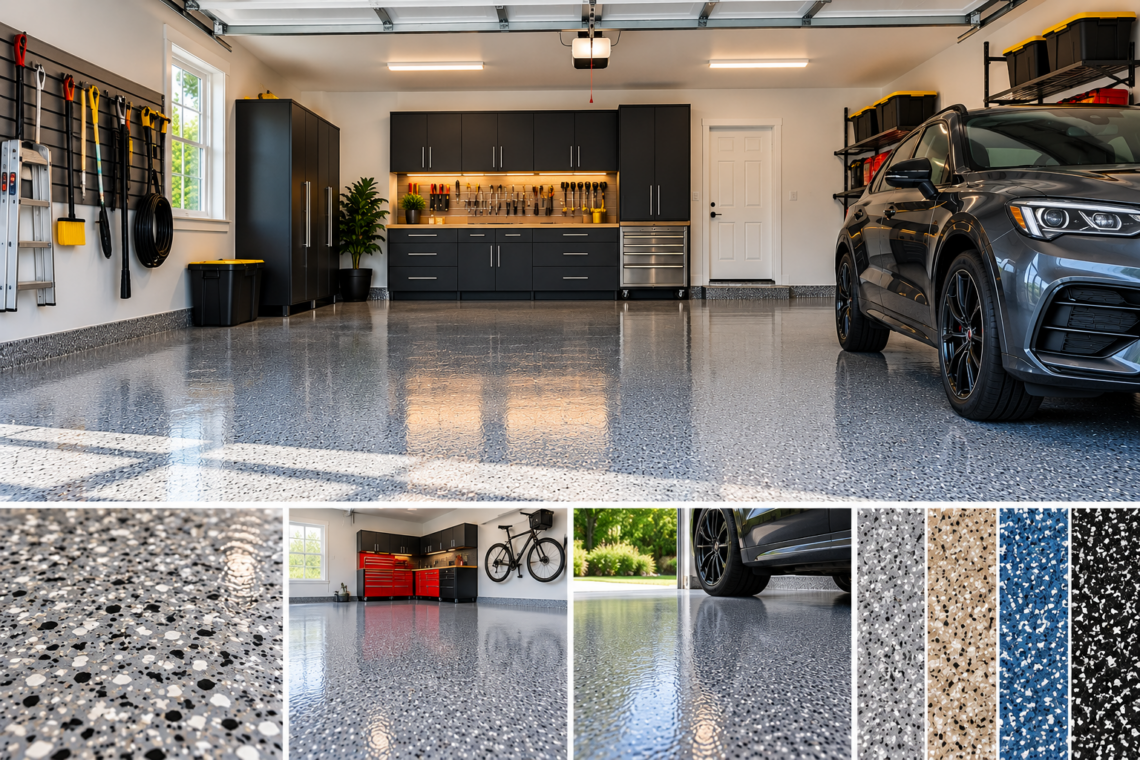
Garage epoxy flooring is a coating system applied over a properly prepared concrete floor. Epoxy resin and a hardening component combine to create a strong surface that bonds with the concrete. The finished coating can provide resistance to everyday wear, stains, impacts, and many common substances found in garages. It also creates a smoother surface that is generally easier to clean than unfinished concrete. Homeowners can choose different colors and decorative finishes based on the appearance they want. Some prefer a simple solid color, while others choose decorative flakes to add texture and visual variation. The final result depends heavily on the condition of the concrete and the quality of preparation before the coating is applied.
Why Do Homeowners Choose Epoxy for Garage Floors?
Garage flooring needs to handle conditions that are different from many other areas of a home. Vehicles, tools, storage equipment, and outdoor materials can all introduce dirt and contaminants to the floor. Epoxy provides a practical way to protect the existing concrete while improving the usability of the space. Choosing garage epoxy flooring service can help protect the existing concrete while improving the usability of the space. A garage requires a surface that can handle vehicles and heavy activity, while living areas may place greater importance on appearance and comfort.
Protection From Everyday Wear
Vehicles and heavy items can place significant pressure on a garage floor. Tools or equipment may also be moved across the surface, creating scratches or impact marks. A durable epoxy coating helps protect the concrete from regular wear. This can be particularly useful for homeowners who use their garages as workshops or active storage areas.
Easier Cleaning
Unfinished concrete is porous, so oil, grease, dirt, and other liquids can penetrate the surface. Once absorbed, some stains can be difficult to remove. Epoxy creates a smoother and less porous surface. Spills can generally be cleaned more easily, helping homeowners maintain a cleaner garage with less effort. Regular sweeping and appropriate cleaning are usually enough for routine maintenance.
A More Finished Appearance
A garage does not have to look like an unfinished utility area. Flooring is one of the easiest ways to give the space a more complete appearance. Solid colors can create a simple look, while decorative finishes can add more visual interest. The flooring can also be coordinated with storage cabinets, walls, lighting, and other garage features.
How Garage Flooring Fits Into Residential Flooring Plans
Garage flooring is often considered separately from the rest of the home, but it can be part of a larger residential flooring plan. Homeowners renovating several areas may want each space to have a flooring system that matches its purpose and level of use. A garage requires a surface that can handle vehicles and heavy activity, while living areas may place greater importance on appearance and comfort. Exploring different residential flooring solutions can help homeowners understand how flooring systems can be selected according to the needs of each room. This approach is especially useful during larger home improvement projects in Woodland Park, NJ, where homeowners may be upgrading multiple areas at the same time.
What Are the Main Garage Epoxy Design Options?
Epoxy flooring can be customized in several ways. The best option depends on the desired appearance and how the garage will be used.
Solid Color Finishes
A solid-color epoxy floor creates a clean and consistent appearance. It works well for homeowners who prefer a simple design that does not distract from other garage features. Different shades can be selected to complement walls, cabinets, vehicles, or other elements within the space.
Decorative Flake Finishes
Decorative flakes add multiple colors and subtle texture to the flooring system. This is a popular option for residential garages because it combines visual appeal with practical benefits. The flakes can also help make small amounts of dirt and dust less noticeable between cleaning sessions.
Custom Decorative Designs
Some homeowners want their garage to have a more distinctive appearance. Depending on the flooring system, different colors and decorative elements can be combined to create a customized result. The design should still support the practical requirements of the space. A visually appealing finish should also be easy to maintain and appropriate for the expected level of traffic.
Can Epoxy Flooring Be Used in Other Areas of the Home?
Yes. Epoxy coatings are not limited to garages. Different residential spaces may benefit from coated concrete when durability, easy cleaning, and a seamless appearance are important.
Basement Areas
Basements can experience moisture, humidity, and changing temperatures. The existing concrete should be assessed before any coating is installed, especially when moisture is a concern. For homeowners planning a basement renovation, epoxy basement flooring can provide a durable surface that works well for storage areas, home gyms, entertainment rooms, and other finished spaces. The flooring should be selected according to how the basement will be used and the condition of the existing concrete.
Living Spaces
Some homeowners also consider decorative epoxy systems for interior areas where they want a seamless and distinctive floor. Living rooms and other open areas can use decorative finishes to create a modern appearance.
For example, epoxy flooring for living rooms can offer different colors and decorative effects while providing a continuous surface. The appropriate system depends on the home’s design and the performance requirements of the space.
Other Residential Areas
Epoxy and related coating systems may also be considered for workshops, utility rooms, and other areas where concrete is already present. However, not every room requires the same type of coating. Residential flooring should always be selected according to the function of the space rather than using one material throughout the entire property.
What Affects Garage Epoxy Flooring Performance?
Several factors can affect how well an epoxy floor performs after installation. The material is important, but preparation and environmental conditions also play major roles.
Concrete Condition
Existing cracks, damaged areas, old coatings, and surface contaminants may need to be addressed before the epoxy is applied. A coating cannot correct major problems in the concrete underneath. Preparing the surface properly helps create better conditions for adhesion and long-term performance.
Moisture
Excess moisture can interfere with some concrete coating systems. Garages and other areas should be evaluated for moisture concerns before installation. Addressing these issues early can help reduce the risk of coating problems later.
Traffic and Usage
The amount of traffic a garage receives should also be considered. A garage used mainly for parking has different requirements from one used as a workshop or home gym. Heavy equipment, frequent vehicle movement, and other demanding conditions may require a flooring system designed for higher levels of use.
How Is a Garage Epoxy Floor Installed?
Professional installation generally involves several stages. Each step helps prepare the concrete and create a consistent finished surface.
Inspecting the Floor
The existing concrete is checked for cracks, damage, moisture, stains, and previous coatings. Any conditions that could affect installation are identified before work begins.
Preparing the Concrete
The surface is cleaned and mechanically prepared to remove contaminants and create the appropriate profile for the coating. Repairs may also be completed during this stage when necessary.
Applying the Coating
The epoxy system is applied to the prepared concrete according to the selected specifications. Decorative flakes or other finishes can be added as part of the installation.
Curing
The completed floor needs appropriate curing time before normal garage activities resume. The required time depends on the product, environmental conditions, and installation process.
How Should Homeowners Maintain an Epoxy Garage Floor?
Epoxy flooring is relatively easy to maintain, but regular care helps preserve its appearance and performance. Sweeping the floor regularly removes dirt and abrasive particles. Spills should also be cleaned promptly, particularly when they involve oil, automotive fluids, or other substances. Homeowners should use cleaning products that are suitable for the installed coating. Harsh chemicals, abrasive tools, or unsuitable cleaning methods can affect the finish. It is also helpful to inspect the floor periodically. Small areas of damage can be addressed before they become larger problems.
Is Garage Epoxy Flooring Right for Every Home?
Epoxy can be an excellent choice for many residential garages, but it is not automatically suitable for every concrete surface. The condition of the existing floor, moisture levels, expected traffic, desired appearance, and installation requirements should all be considered before choosing a system. A professional assessment can help determine whether the concrete is suitable and what preparation may be required. This is especially important for older garages with visible damage or previous coatings.
Why Professional Installation Matters
The quality of the installation can have a major effect on the final result. Proper surface preparation, material application, coating thickness, and curing all contribute to the performance of the finished floor. Professional installers can evaluate the concrete and recommend a system based on how the garage will be used. They can also identify potential problems before installation rather than discovering them after the coating has been applied. For homeowners in Woodland Park, NJ, working with an experienced flooring professional can make it easier to plan the project around the property’s specific conditions.
Conclusion
Garage epoxy flooring can help homeowners protect concrete while creating a cleaner, more attractive, and easier-to-maintain surface. Its durability and range of design options make it suitable for garages used for parking, storage, hobbies, workshops, and other residential activities. Garage flooring can also be considered as part of a wider residential improvement plan. While garages may require heavy-duty protection, basements and living spaces may need different flooring characteristics based on how they are used. By evaluating the existing concrete, moisture conditions, traffic levels, design preferences, and maintenance needs, homeowners can choose a flooring system that fits their property. With proper preparation and professional installation, an epoxy floor can provide dependable performance and a finished appearance for years to come.