Brands are constantly looking for better ways to capture attention and make their marketing more memorable. Logos, colors, slogans, and product imagery all contribute to brand identity, but a well-designed character can add something different: personality.
A mascot can speak, react, demonstrate, explain, and become a recognizable part of a company’s visual identity. When that character is brought to life through animation, it can become a flexible marketing asset that works across videos, social media, websites, advertisements, and other digital channels.
For this reason, 2D animated mascots have become an interesting option for businesses that want to combine storytelling with recognizable visual branding. Two-dimensional animation is particularly suitable for character-driven content because it allows designers to create expressive personalities without being restricted by realistic movement or physical environments.
What Makes an Animated Mascot Different?
A traditional logo identifies a company visually, while a mascot can actively participate in its communication.
An animated character can welcome viewers, explain a product, demonstrate a process, react to a problem, or guide someone through a customer journey. This gives brands another way to communicate information without relying entirely on text or conventional promotional footage.
The character can also develop recognizable traits. Its appearance, voice, expressions, movements, and personality can remain consistent across different campaigns.
Over time, that consistency can help audiences associate the character with the brand.
Why Brands Are Turning to 2D Character Animation
There are several reasons businesses choose 2D animation for character-based marketing.
A Friendly and Approachable Visual Style
Two-dimensional characters can be designed in many different styles, from simple and playful illustrations to detailed cinematic artwork.
This flexibility makes them suitable for different audiences and industries. A financial company might use a clean professional character, while an educational brand could use a more colorful and playful personality.
The style can be developed around the company’s existing visual identity rather than forcing the brand into a particular aesthetic.
More Freedom With Character Expressions
One of the biggest advantages of animation is creative flexibility.
A character does not need to behave like a real person. It can exaggerate facial expressions, change shape, move in unusual ways, or interact with objects that would be difficult to produce in live action.
These techniques can make explanations more visually engaging while helping the character communicate emotions quickly.
Reusable Marketing Assets
A well-developed mascot does not have to appear in just one campaign.
Once the character has been designed and animated, businesses can potentially reuse it across:
- Explainer videos
- Social media clips
- Digital advertisements
- Website animations
- Product demonstrations
- Email campaigns
- Educational content
- App onboarding
- Presentation materials
This makes the mascot part of a broader visual system rather than a one-time creative element.
How Brands Use Mascots in Video Marketing
The role of an animated mascot depends on the campaign’s objective. Some businesses use characters primarily for entertainment, while others make them central to explaining products or services.
1. Explainer Videos
Explaining a complicated product or service can be challenging when the subject involves technical processes, unfamiliar terminology, or multiple steps.
A mascot can act as a visual guide throughout the explanation.
For example, an animated character could introduce a software platform, demonstrate how a feature works, or represent a customer moving through a particular process.
This approach gives the viewer a consistent visual reference while the information is being presented.
2D animation is widely used for marketing, explainer videos, education, and communication because characters and illustrated visuals can simplify information while keeping the presentation visually engaging.
2. Social Media Content
Social platforms are crowded with promotional content, so businesses need recognizable visual elements that can make their posts identifiable.
A recurring mascot can provide that consistency.
Instead of creating completely different visual concepts for every social post, a brand can use its character in different situations. The mascot might share a tip, introduce a new product, respond to a seasonal event, or appear in a short humorous clip.
Short character-led videos can also be adapted to different platforms and formats.
3. Product Demonstrations
Some products are difficult to demonstrate through traditional video.
Software, digital services, technical systems, and abstract concepts may require screenshots, diagrams, or lengthy explanations.
An animated character can guide viewers through the product while supporting visuals appear around it. This creates a story rather than simply presenting a list of features.
4. Advertising Campaigns
Mascots can also become the central character in animated advertisements.
Instead of focusing entirely on a product shot, the campaign can build a short story around a recognizable personality. The character can encounter a problem, discover the product, and demonstrate the solution.
This storytelling structure can make a short advertisement easier to remember.
Building a Character That Fits the Brand
Creating an attractive cartoon character is only one part of the process. The mascot also needs to make sense for the company using it.
Before designing the character, businesses should consider:
- Who is the target audience?
- What personality should the brand communicate?
- Is the brand serious, playful, innovative, educational, or traditional?
- What type of visual style fits existing branding?
- Where will the character appear?
- Will the mascot speak or communicate through movement?
- How frequently will the character be used?
These questions can help prevent the character from becoming disconnected from the overall brand identity.
Personality Matters as Much as Appearance
A recognizable mascot needs more than an interesting design.
Its personality can come from its:
- Facial expressions
- Body language
- Voice
- Movement
- Sense of humor
- Reactions
- Catchphrases
- Interaction with other characters
For example, a technology company might create a curious and problem-solving character, while an educational brand could use a friendly guide who encourages viewers as they learn.
The personality should support the company’s communication style rather than distract from the message.
Keeping the Character Consistent
Consistency is particularly important when a mascot appears across multiple campaigns.
The character should maintain recognizable features such as its colors, proportions, clothing, expressions, and overall design language.
That does not mean every appearance needs to look identical. The mascot can have different poses, environments, or actions while retaining its core visual identity.
This approach helps turn the character into a recognizable brand asset.
Using Mascots Beyond Video
One of the advantages of character animation is that the underlying character design can potentially be used beyond a single video.
A business might use the same mascot on:
- Website pages
- Social media graphics
- Digital advertisements
- Presentations
- Mobile applications
- Packaging
- Educational resources
- Event displays
This creates opportunities for a consistent visual experience across multiple customer touchpoints.
A mascot can therefore become part of the wider brand identity rather than simply being an animation element.
Choosing Between 2D and 3D Character Animation
Both 2D and 3D animation can be effective, but they create different visual experiences.
2D animation generally offers a stylized and highly customizable appearance. It can work particularly well for explainers, educational videos, social content, and character-driven storytelling.
3D animation can provide depth, realistic lighting, detailed environments, and more dimensional product presentations.
The right choice depends on the message, audience, brand style, budget, and intended platforms.
A company that wants a friendly illustrated mascot may find 2D character animation suitable, while a business demonstrating a physical product may benefit from a more dimensional 3D approach.
How Professional Animation Can Strengthen the Concept
A strong mascot idea still needs professional execution. Character design, storyboarding, voice acting, movement, timing, sound design, and editing all contribute to the final result.
A professional animation team can help transform an initial character concept into a complete marketing asset.
For businesses exploring professional 2D animation services, Hatch Studios works across 2D animation, character-driven content, explainer videos, motion graphics, and other forms of animated communication. Its 2D production work is designed for applications including marketing, advertising, social media, education, and branded storytelling.
This type of production approach can help businesses develop a character that is not only visually appealing but also practical for repeated marketing use.
Planning the Production Process
Developing an animated mascot usually involves several stages.
Concept Development
The creative team defines the purpose of the character, audience, personality, and visual direction.
Character Design
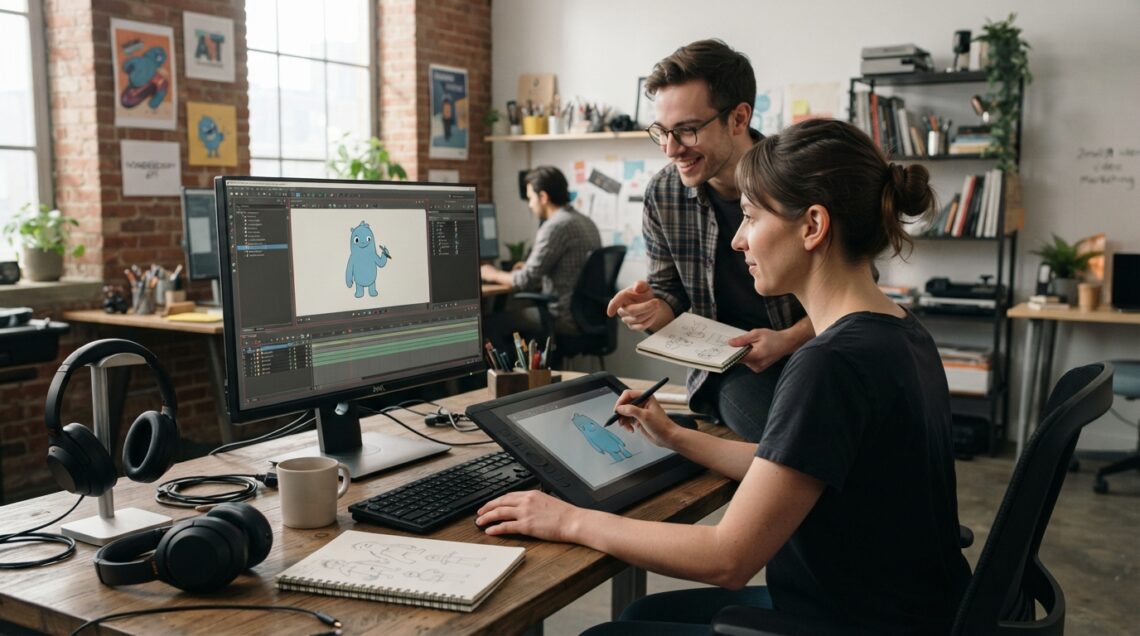
Initial sketches and character concepts are developed before the final appearance is established.
Storyboarding
The storyboard maps out the scenes, actions, camera movements, and narrative structure.
Animation
The approved character is brought to life through movement, expressions, transitions, and scene interaction.
Voice and Sound
Voice acting, music, and sound effects can add personality and improve the overall storytelling experience.
Final Production
The finished animation is edited, refined, rendered, and prepared for its intended platforms.
The exact timeline depends on factors such as video length, complexity, style, and production requirements.
Making a Mascot Useful for Long-Term Marketing
A common mistake is designing a mascot for one specific video without considering future applications.
Businesses can get more value from character development by thinking about the mascot as a long-term asset.
For example, the initial project might introduce the character, while future videos could use the same personality to explain new products, answer common customer questions, or support seasonal campaigns.
Creating a collection of reusable poses, expressions, backgrounds, and animation assets can make future content easier to produce while maintaining visual consistency.
Final Thoughts
A mascot can give a business something that many traditional marketing formats lack: a recognizable personality that can participate directly in the story.
When combined with 2D animated mascots, brands can create characters that explain ideas, support advertising campaigns, entertain audiences, and appear consistently across different marketing channels.
The most effective approach begins with the brand rather than the character itself. The mascot should have a clear purpose, fit the target audience, and communicate the company’s personality. Professional design and animation then turn that concept into a reusable visual asset.
For businesses considering character-led marketing, working with an experienced animation studio can help transform an initial idea into polished content that works across websites, social platforms, advertisements, and broader brand campaigns.